
Roman clay walls you will want to touch
Smooth as suede and warm under your hand, clay drifts from pale to deep as the light crosses it.
Talk with Greg or Gabriel now, until 10 p.m. Text us any time. Greg or Gabriel will reply first thing in the morning.
Roman clay walls for homes
Moroccan clay walls and ceilings
Moroccan clay walls for homes
Earthy clay, troweled by hand with gentle or dramatic movement, and warm in lamplight.
How much do Roman clay walls cost?
Roman clay gives walls a suede-smooth surface that moves with the light, in Portola Roman Clay, Meoded Moroccan clay, or an Italian clay chosen for your walls, troweled by hand in homes north of Indianapolis. Clay walls are an investment from about $7 per square foot of wall in simple rooms; a 12-by-14-foot bedroom with 8-foot ceilings runs about $2,650.
Clay walls, up close
Our own work.
-
Ponderosa Roman clay inset wall and hallway, Geist
Smoky Ponderosa green Roman clay wraps the inset wall around the arched window, where two sconces pour light down the clay, and carries on through the hallways. Beside the soft Cypress Ink limewash of the living room, the clay reads like suede.

Lamplight on the clay 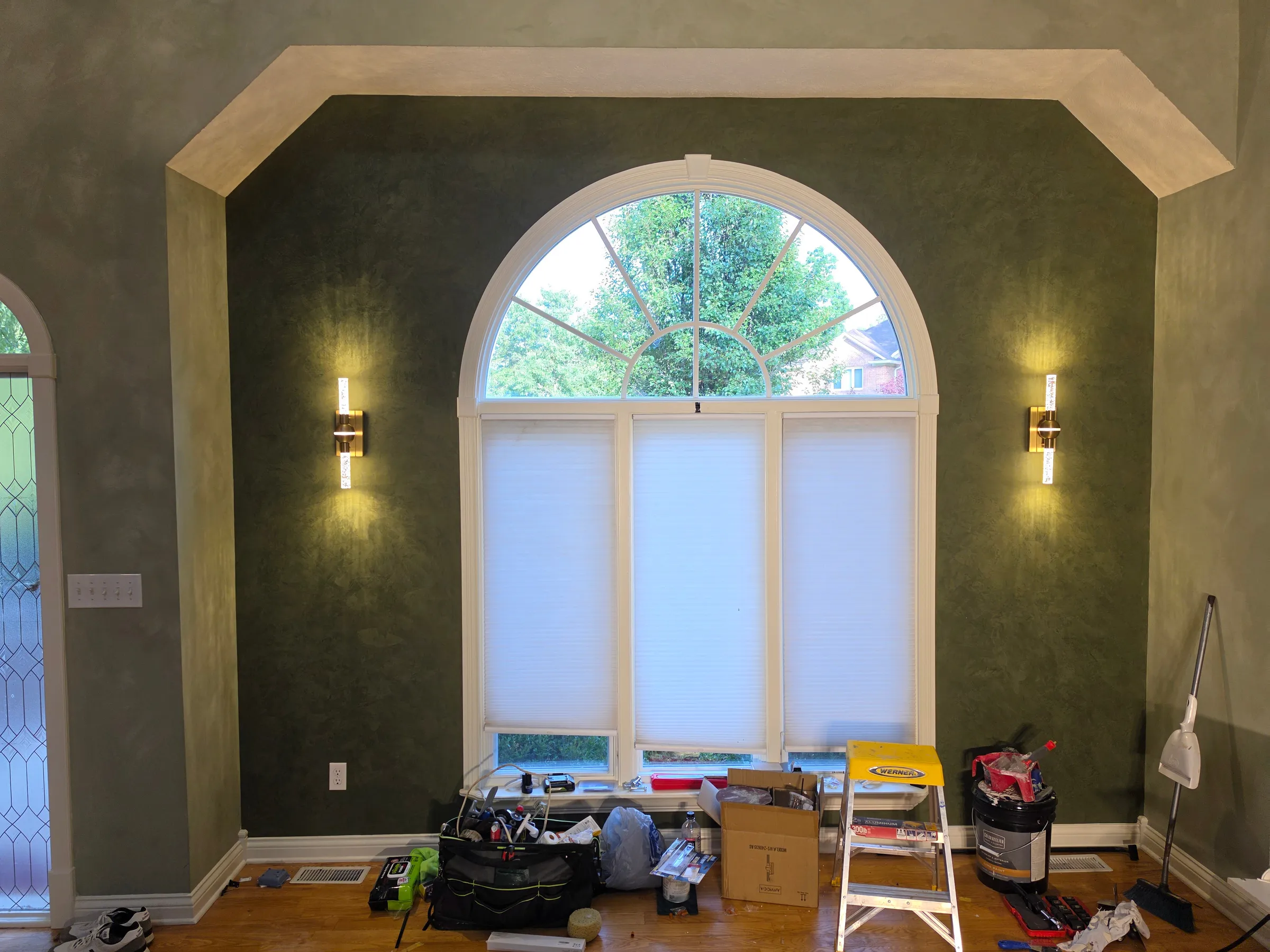
The inset wall around the window 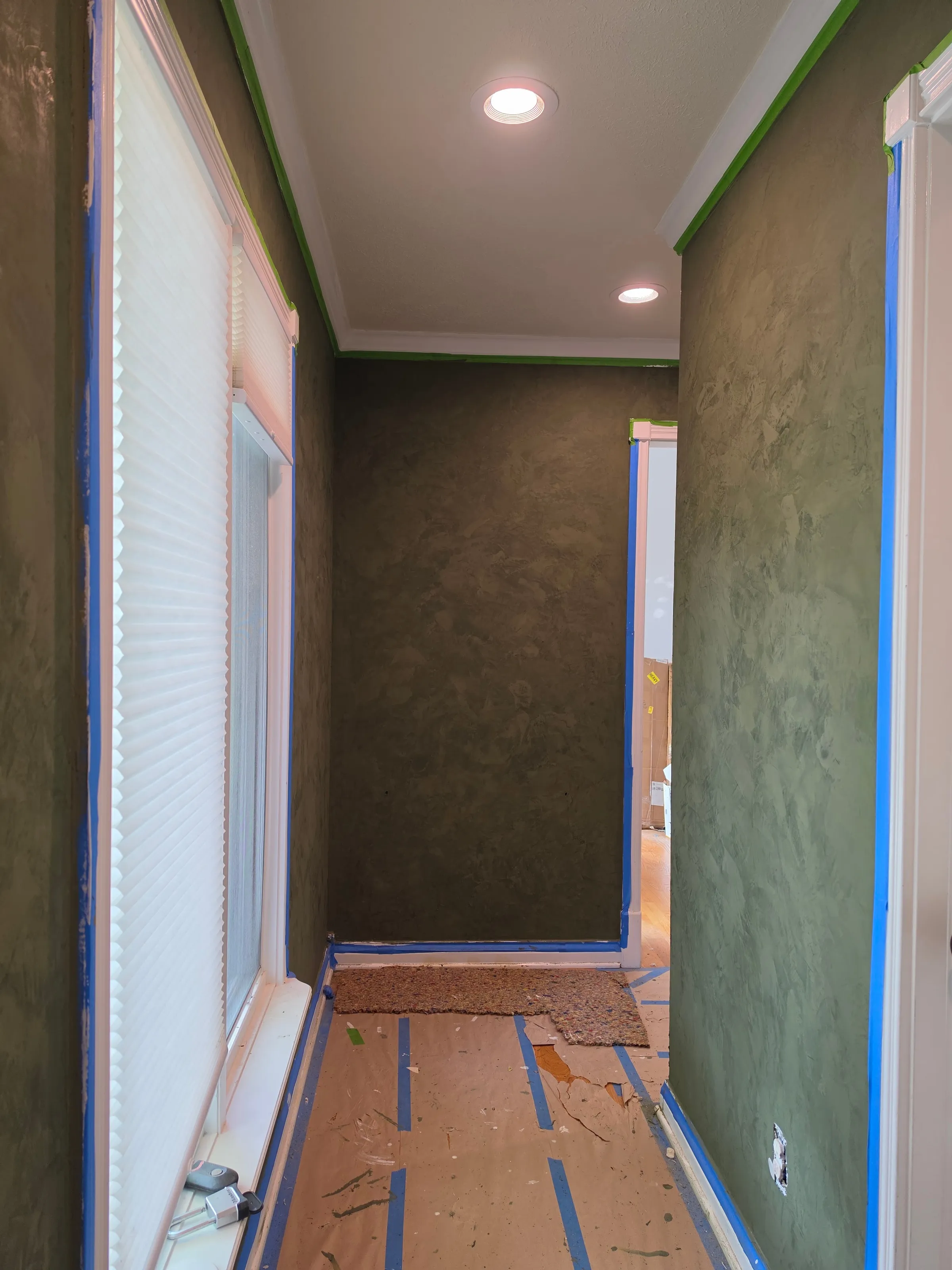
The hallway in the same clay Along the way
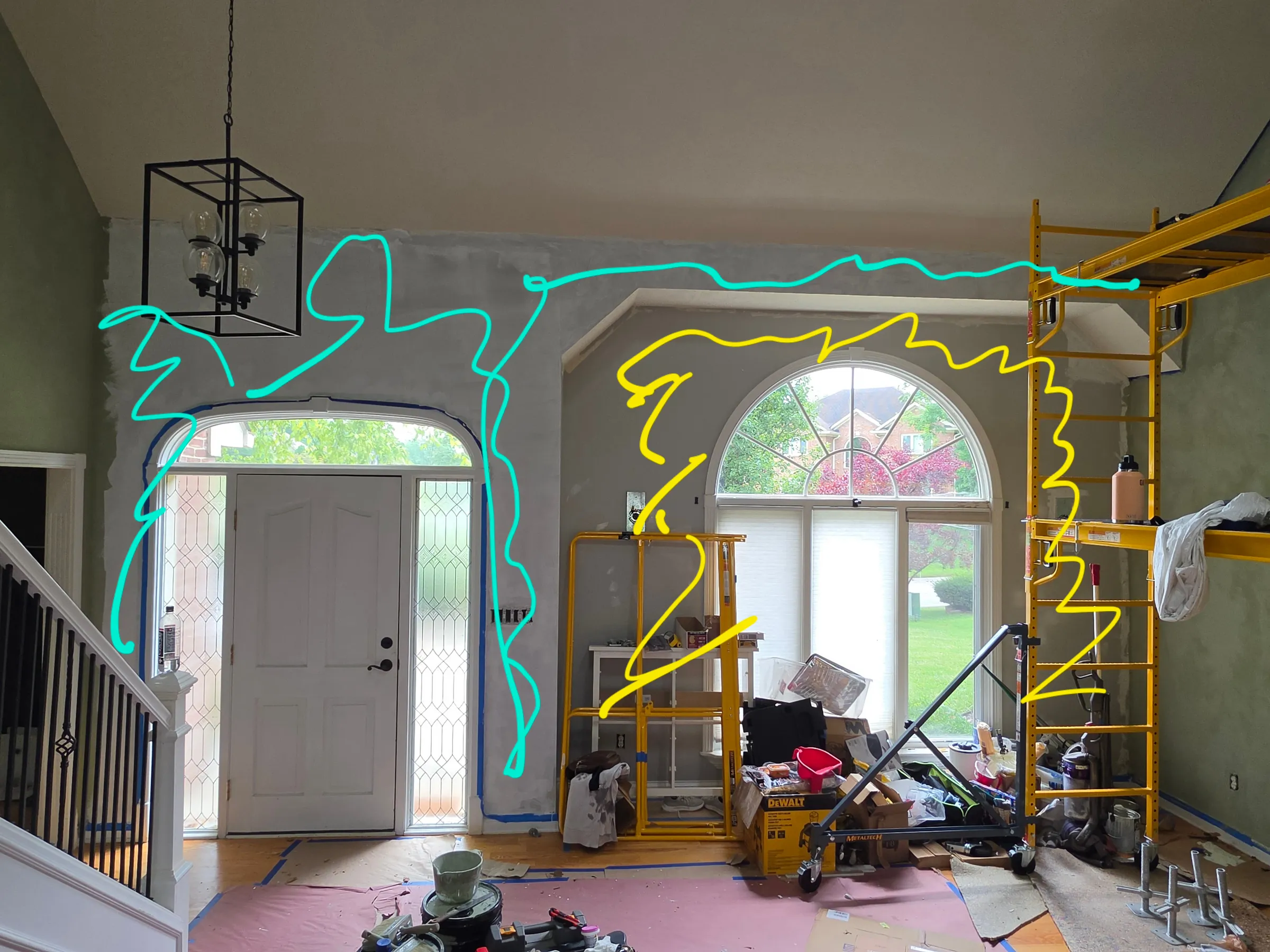
The plan, drawn on a photo of the entry 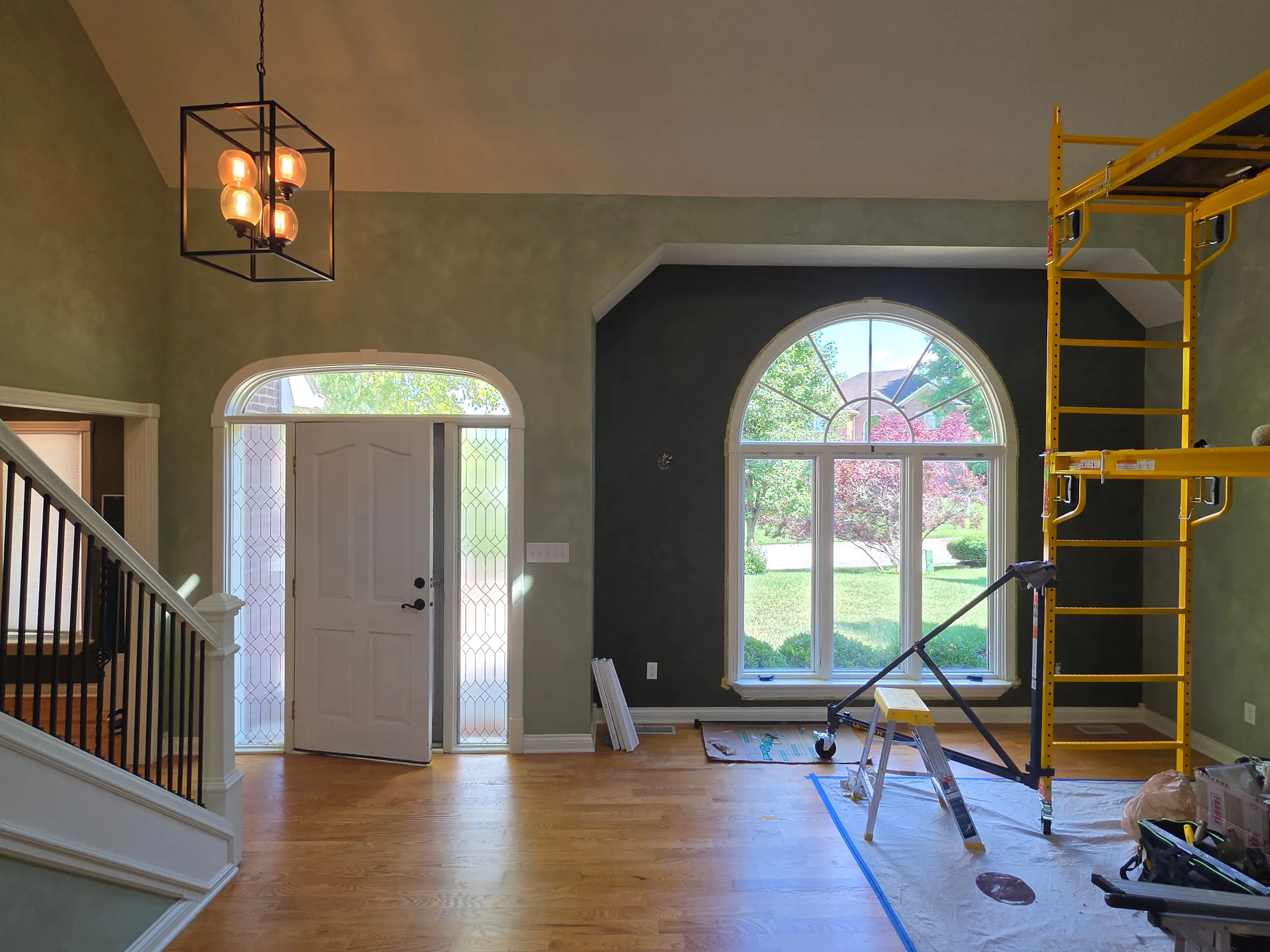
The clay on, the scaffolding still up 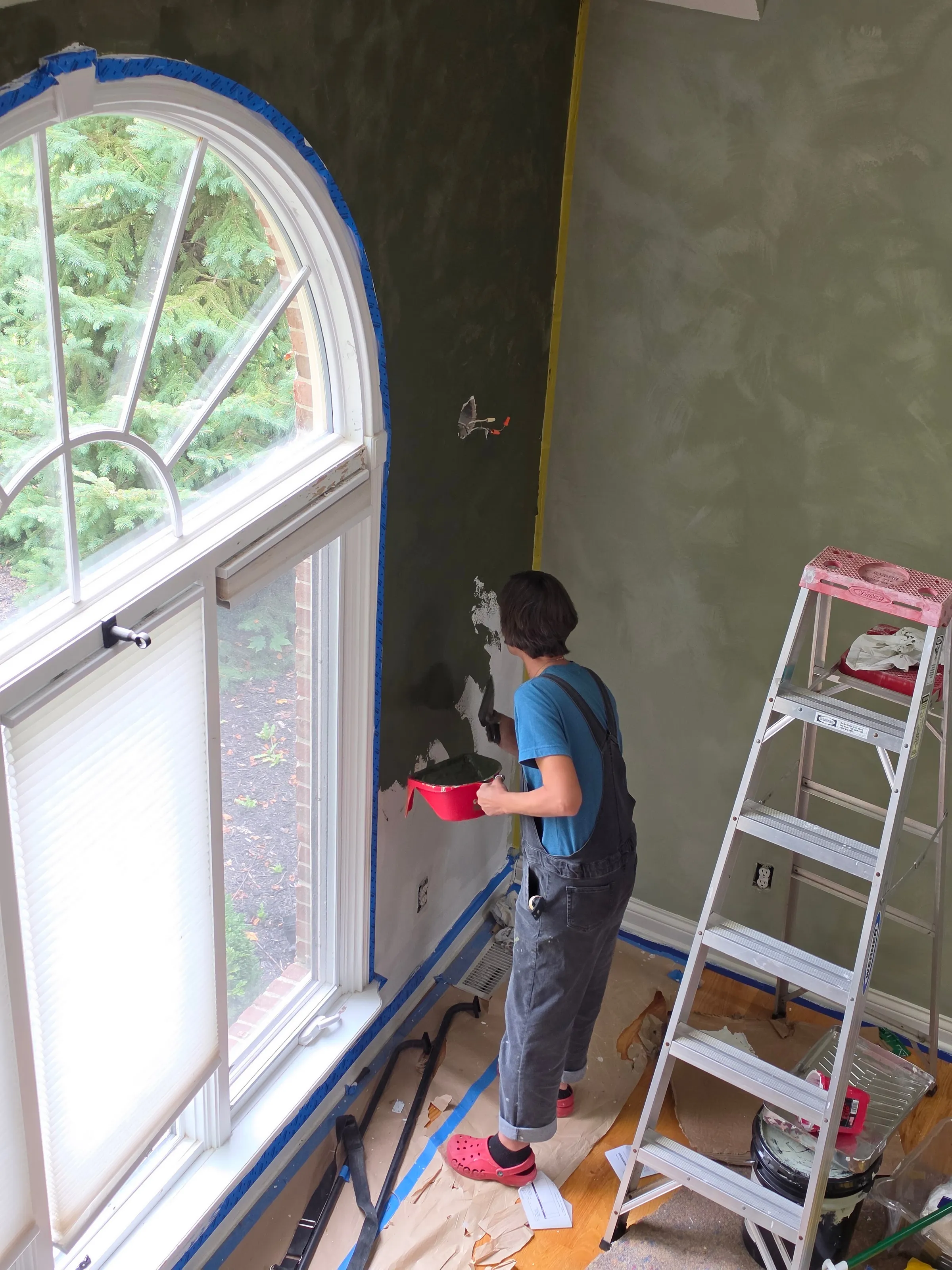
The clay going on beside the arched window 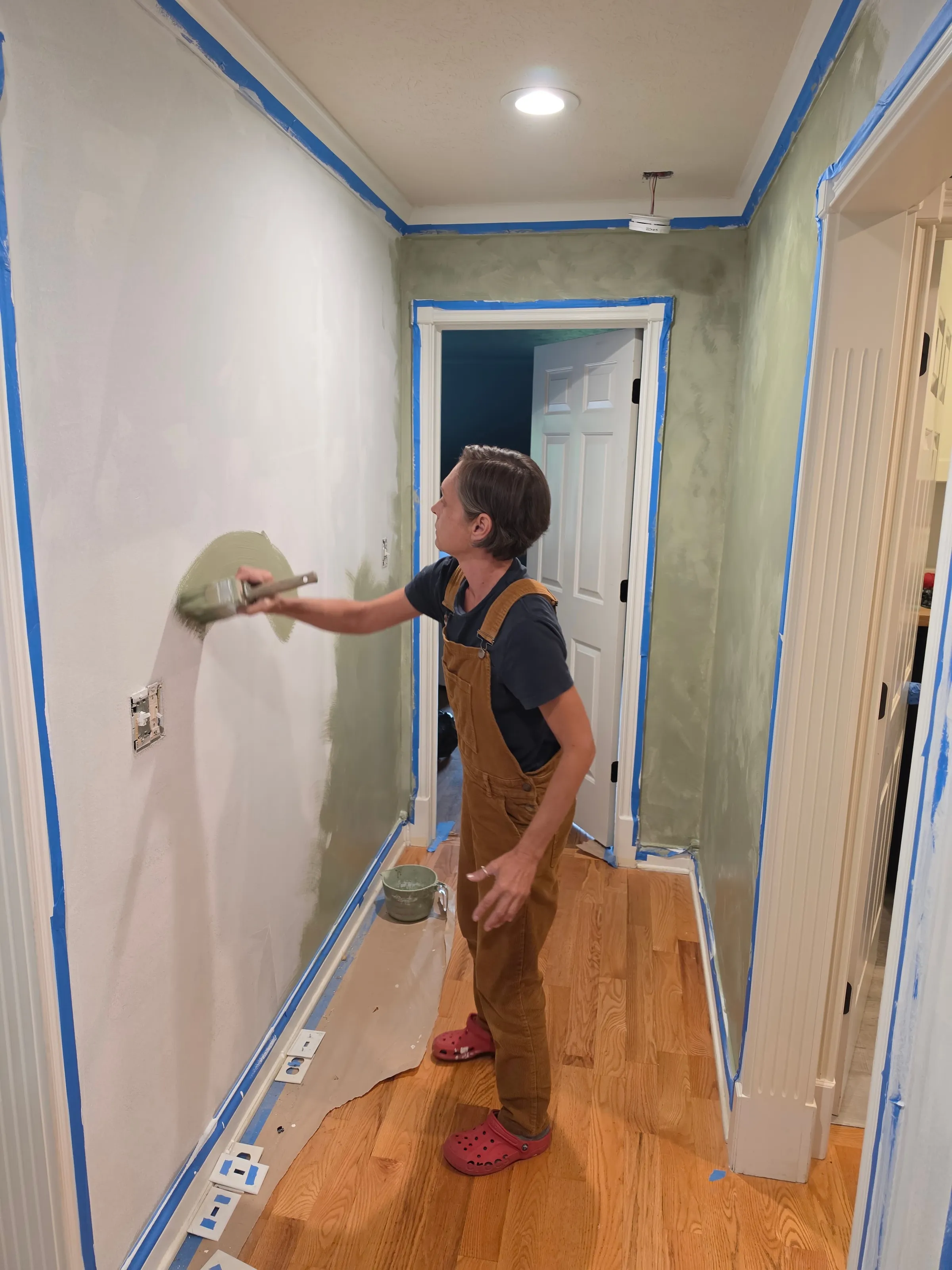
The hallway, its first coat going on -
La Catedral Roman clay foyer, Carmel
La Catedral, a warm mushroom Roman clay by Portola, wraps this foyer and its stairway and gives the house warmth and personality from the moment the front door opens. Guests gasp as they walk in, and nearly every one stops to compliment the walls. It is one of the quickest ways to add beauty and value to a home.
“…effortless warmth and a sense of calm…”
Olga

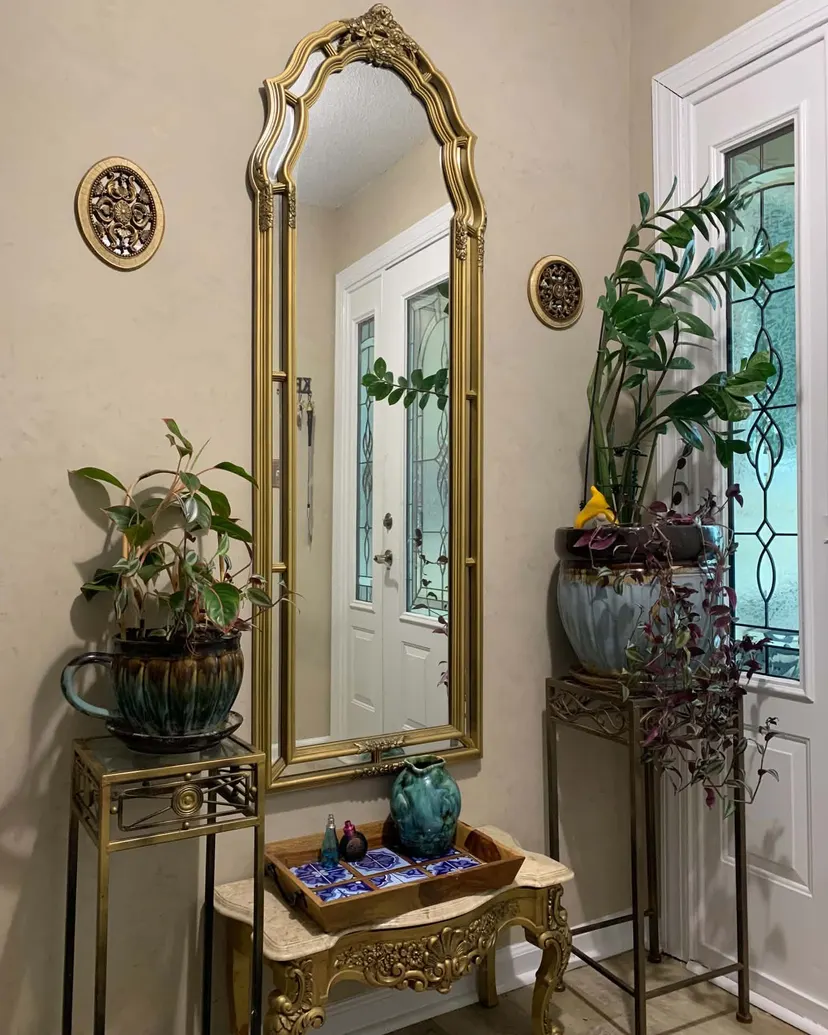
The foyer and its tall gold mirror 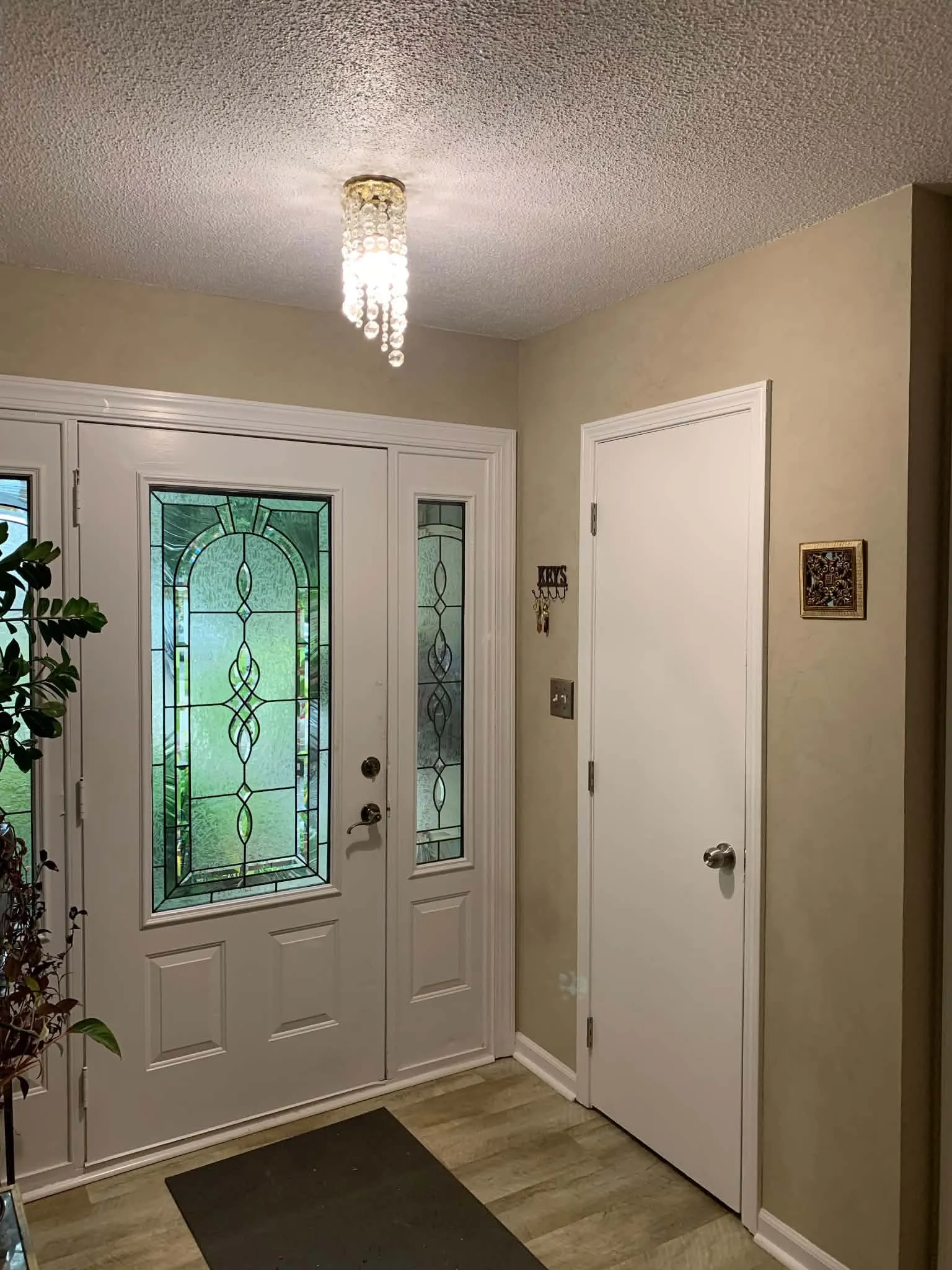
The clay around the front door 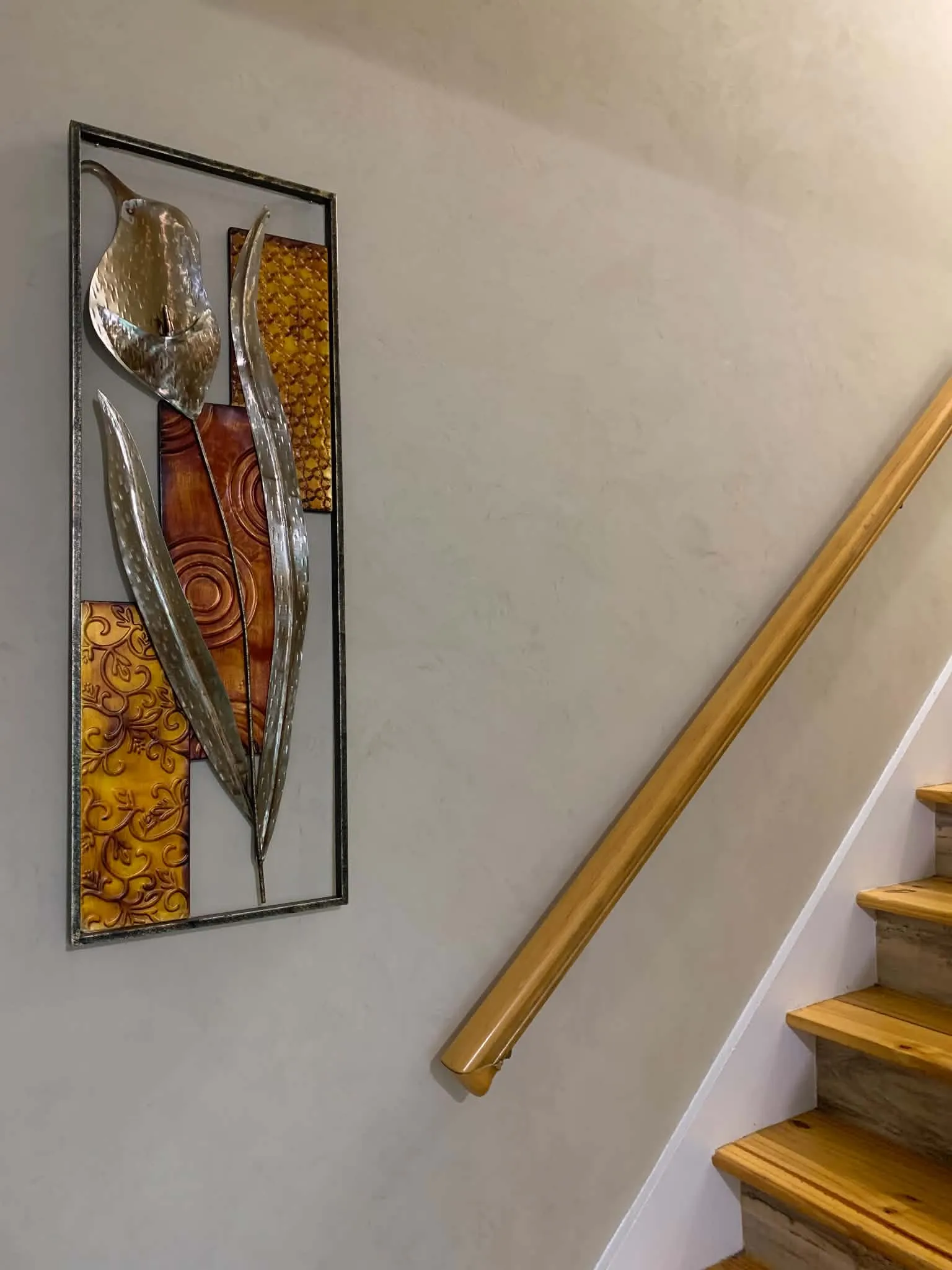
The same clay up the stairway 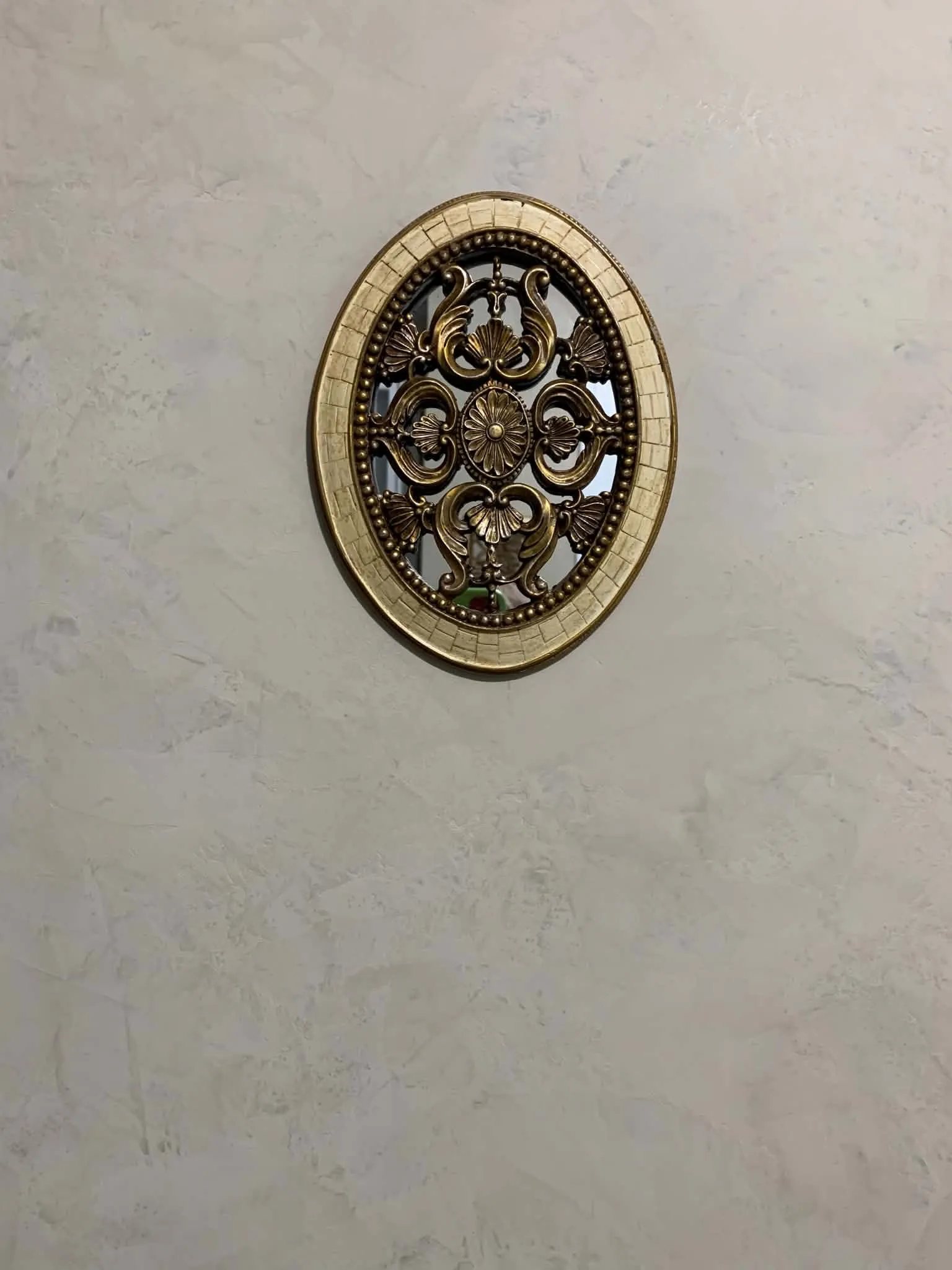
An oval mirror on the clay 
Up close: the clay’s soft movement -
La Catedral Roman clay living room, Zionsville
Dark brown walls gave way to La Catedral, a warm mushroom Roman clay with soft movement in the light, and the kitchen wears the same clay. The same home has a golden powder room.

The whole room, after 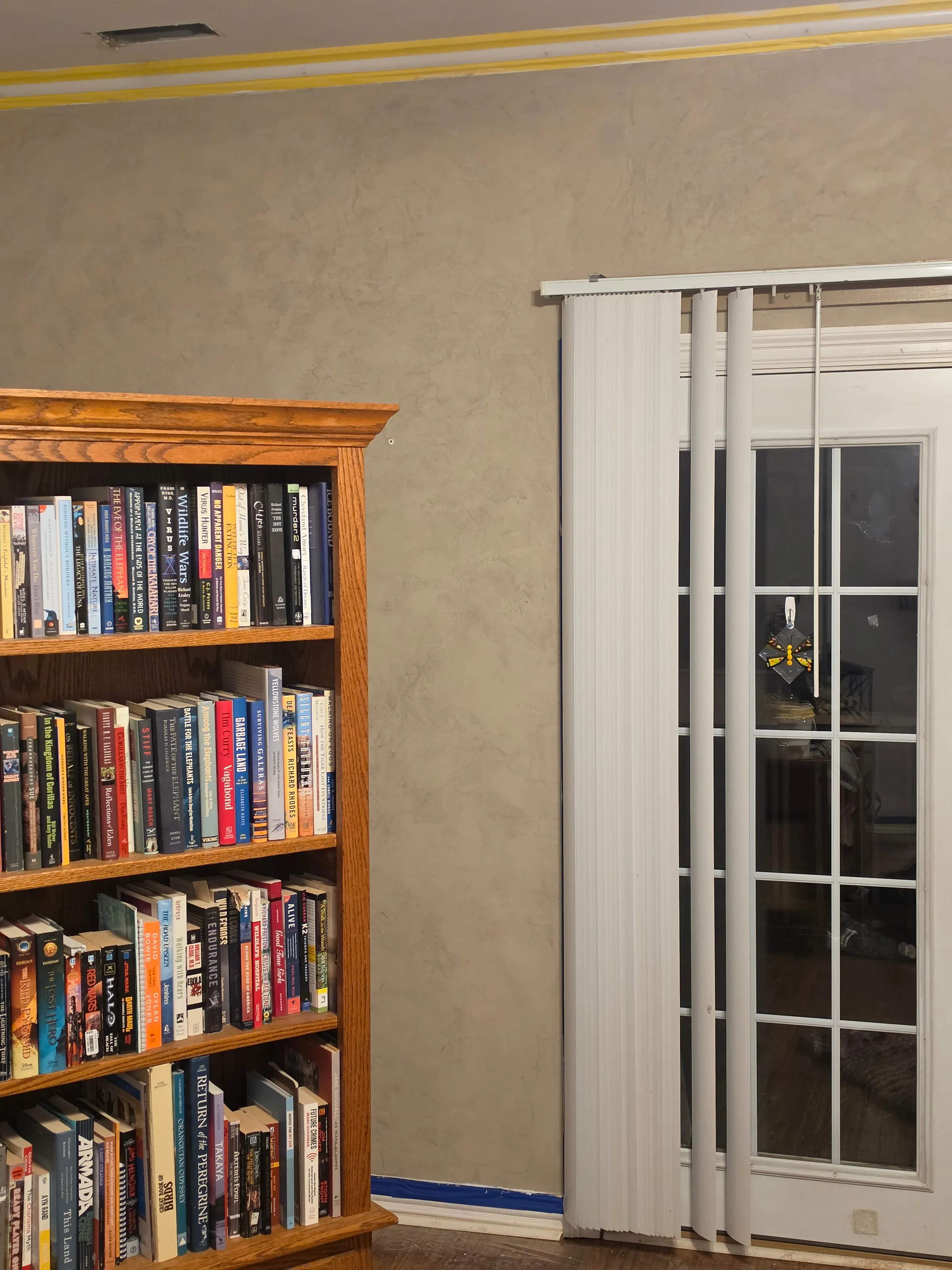
The clay beside the doors Along the way
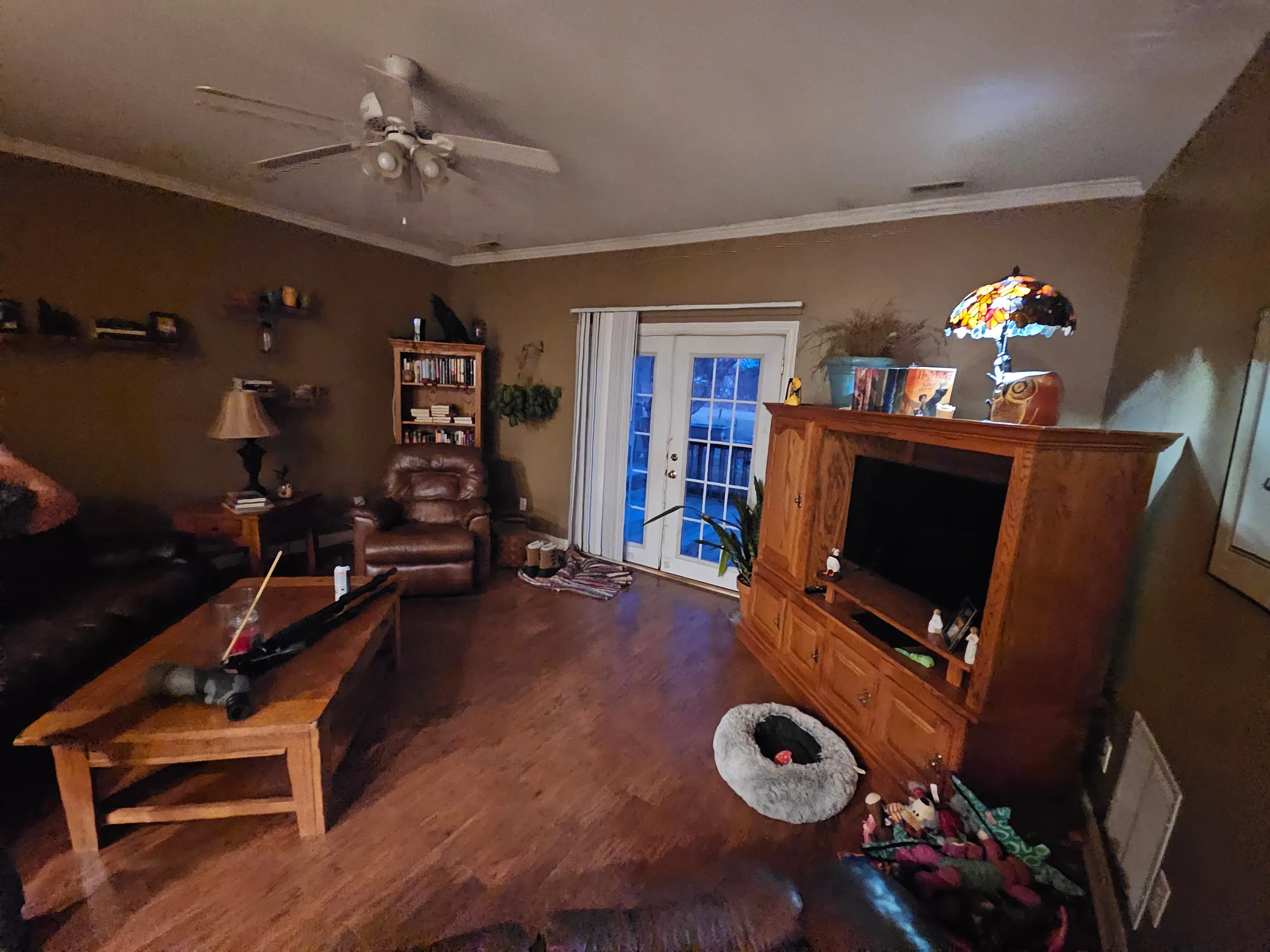
Before: dark brown walls 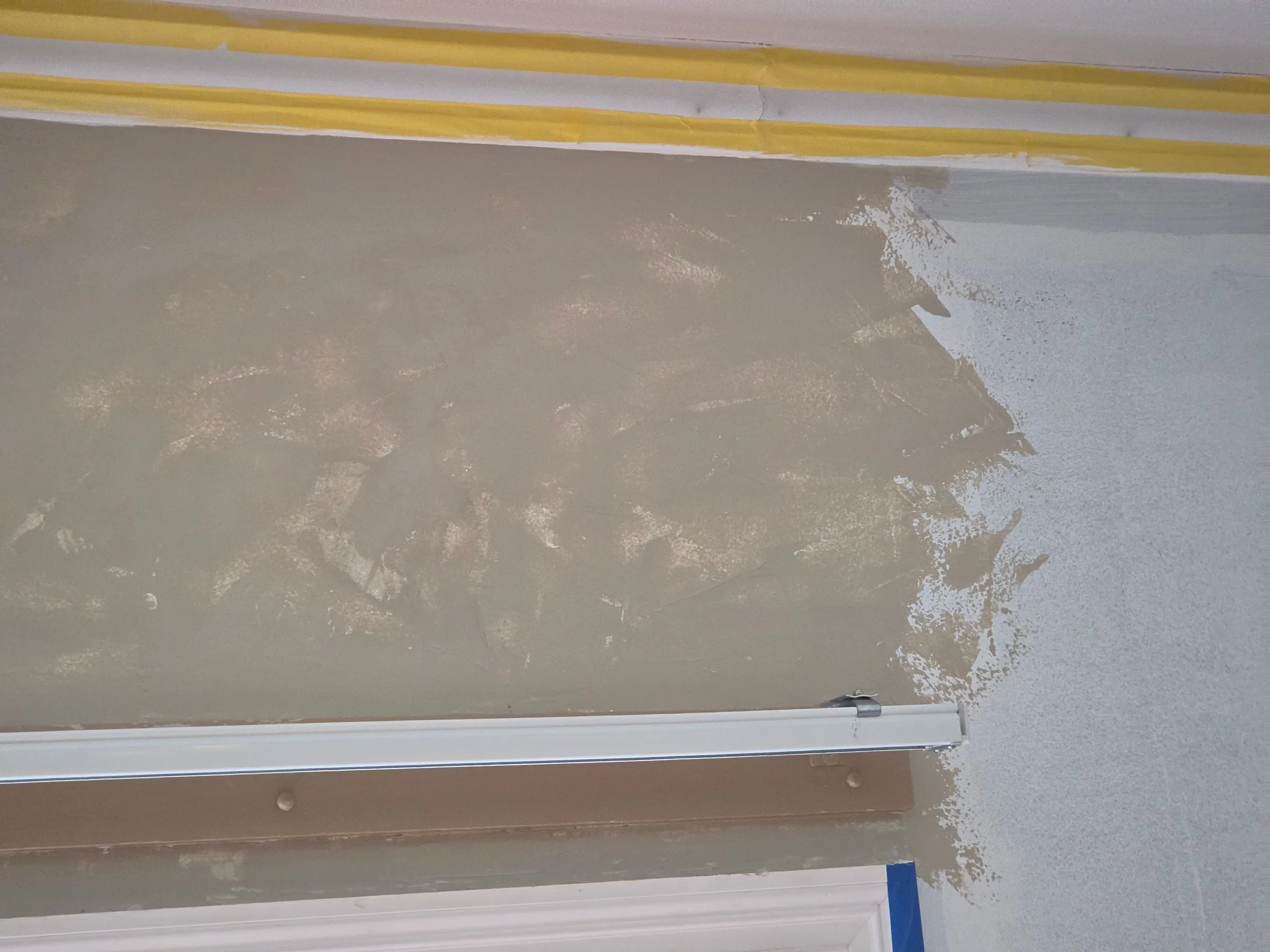
The clay going on -
Clay sample boards
Ponderosa, a smoky green Roman clay, and a rose Moroccan clay, each shown unwaxed beside waxed, so you can see how the wax deepens the color, like stone after rain, before you choose.
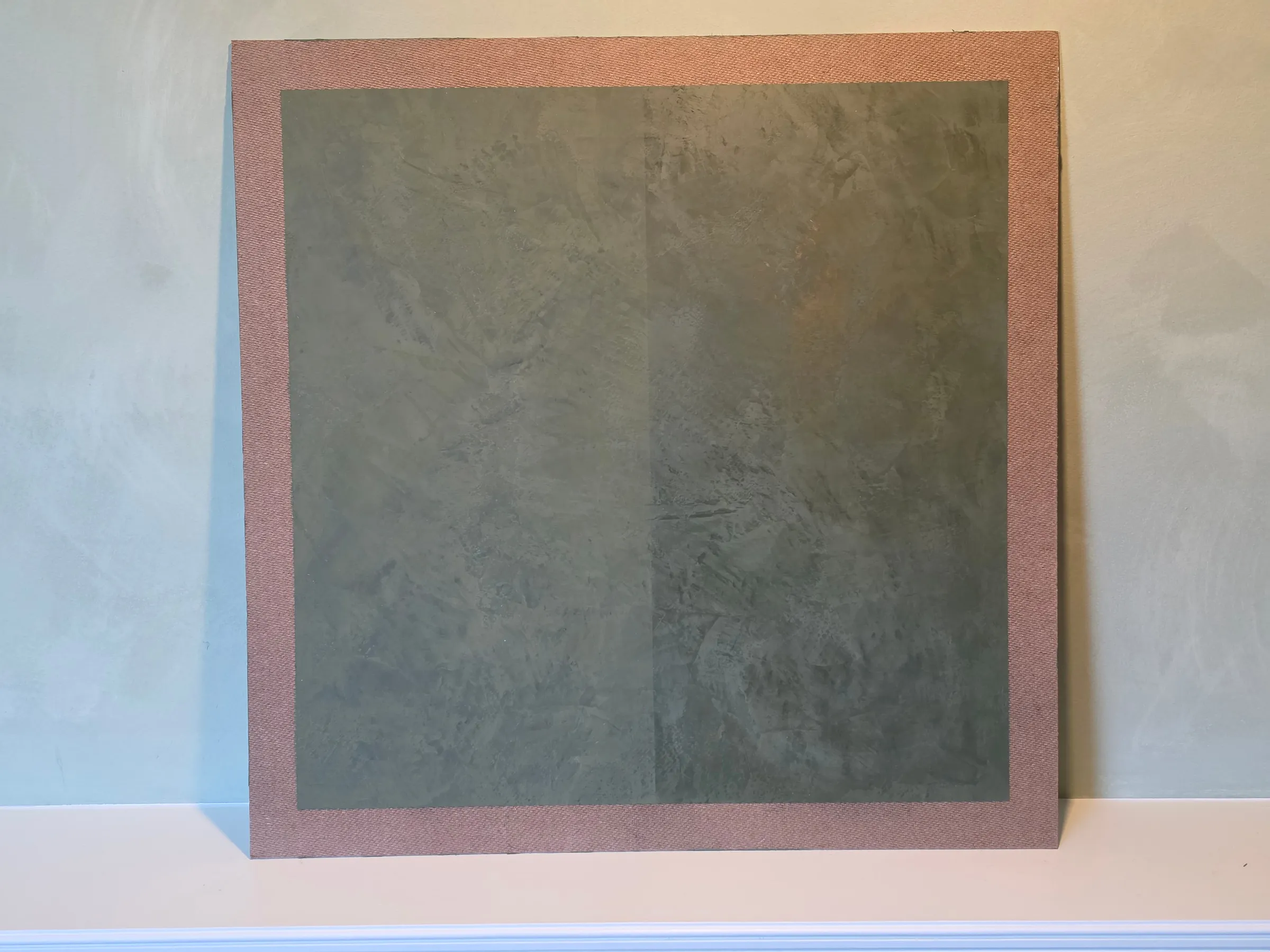
Ponderosa green, unwaxed and waxed 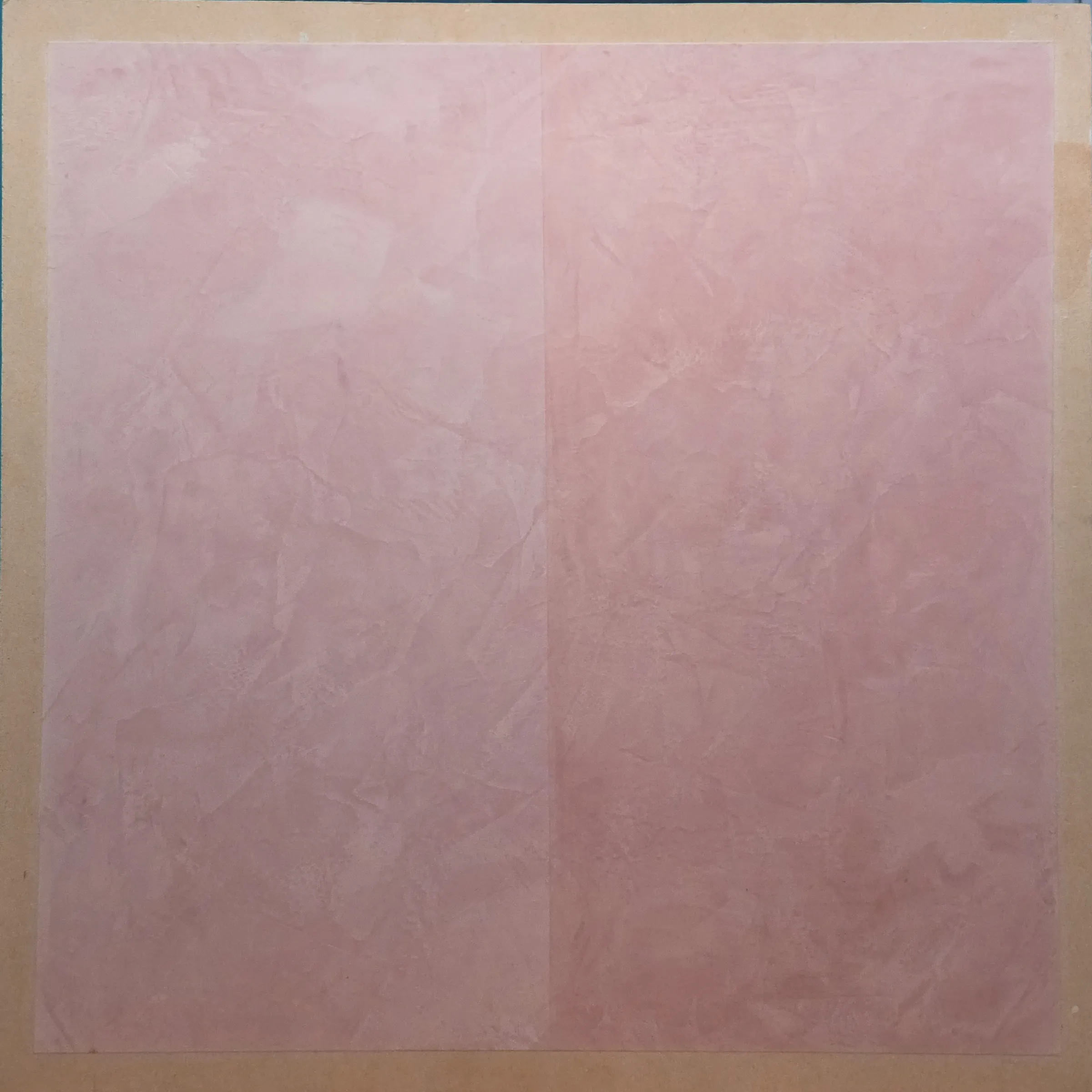
Rose Moroccan clay, unwaxed and waxed
More of our work
-
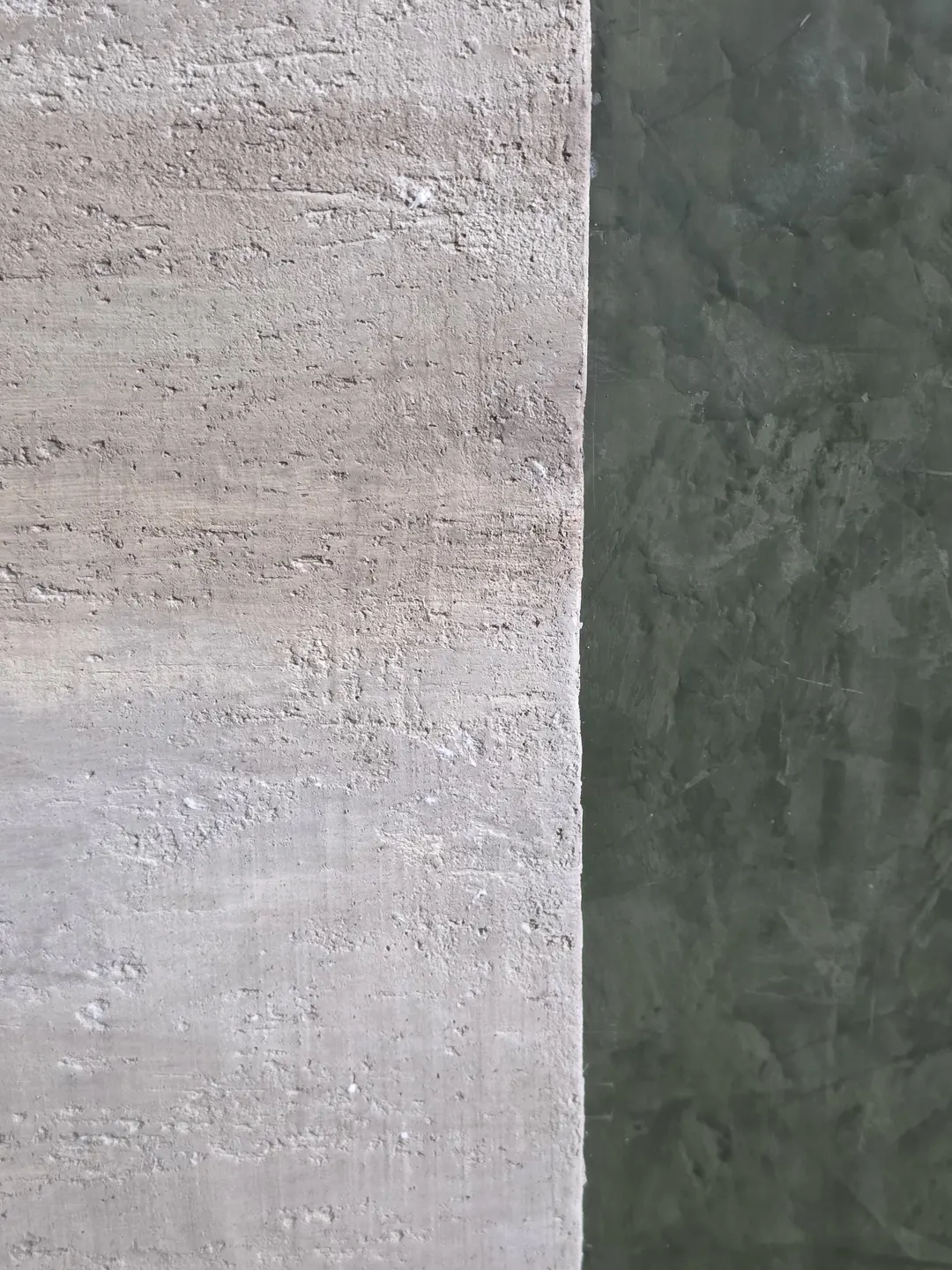
Ponderosa green Roman clay with a faux travertine firebox surround, Zionsville We matched the faux travertine to the marble inlay in the floor, then wrapped the column in smoky Ponderosa green Roman clay, chosen from samples before any touched the wall.
Roman Clay is one clay of many
Roman Clay, by Portola, is the clay everyone has seen online, and sometimes it is exactly right. Often another suits your walls better: Meoded Moroccan clay, an authentic Italian clay, or a designer clay with mica, gems, or straw mixed in. We choose for your room, not for the trend.
Moroccan clay walls and ceilings
Moroccan clay is earthy, with gentle or dramatic movement, in Meoded colors or a custom match. Carried across the ceiling, it wraps the whole room in warmth, and by lamplight the walls seem to breathe.
Ways to finish your walls
Tips from the studio
-
Wax deepens color
A coat of wax over clay or plaster deepens the color, adds a soft sheen, and helps the surface shed water, like a river stone just lifted from the stream.
-
Brush and trowel leave different marks
Limewash is brushed: feathered strokes leave soft, cloudy depth. Clay and plaster are troweled: steel leaves crisper lines, layered into patterns. Both look even only in a practiced hand.
-
Carry the finish onto the ceiling
When you love a finish on the walls, take it up and over. A plaster or clay ceiling wraps the room and softens every lamp beneath it.
-
Caring for clay walls
Waxed clay wipes clean with a damp cloth. Unwaxed clay is softer to the touch and to stains; a fresh coat of wax protects it and deepens its color.
-
Bedrooms want softness
In a bedroom, choose soft, matte finishes and warm, low colors. Clay and limewash take in light gently, and the room winds down with you.
-
Timing is half the finish
A plaster wall is worked at different moments as it dries: wet for color, firmer for pattern, nearly dry for polish. Knowing when to touch the wall, and when to wait, is most of the craft.
-
Frame one panel in another finish
Set a clay panel into a limewash wall, or a polished panel into a matte one. A framed inset gives a wall a center without hanging anything on it.
-
Match the texture to the room
Bold texture and big movement suit a tall wall seen from across a room. A powder room seen up close wants a fine, subtle texture. We sample both, so you see the difference on your own wall.
-
Try a finish on one wall first
Unsure about a whole room? Finish one accent wall and live with it for a season, through bright mornings and winter evenings. Then decide on the rest.
-
Let light graze the wall
A light set close to a wall and aimed along it draws long shadows across plaster and clay, so every pass of the trowel shows. A wall washer does it for a whole wall, a picture light for one piece.
-
Plaster follows a curve
Arches, curved niches, and rounded corners are where plaster shines: it wraps a curve in one continuous skin, with no seams and no edges to hide.
-
Start with the wall everyone faces
Not ready to finish a whole room? Start with the fireplace. Every chair already faces it, so one finish there changes how the whole room feels, and the rest can follow when you are ready.
-
Wood and lime belong together
Natural oak, walnut, and cane beside a mineral wall feel calm and grounded: two natural materials that soften each other.
-
Wet walls look darker
Lime and clay dry lighter than they look while wet, and can take a few days to show their true color. Judge the color once the wall is dry.
-
A calm wall behind your desk
A clay or limewash wall behind your desk reads beautifully on video: soft depth, no glare, and a calm that follows you into every call.
-
Why first attempts look patchy
A beginner’s wall often shows skips, hard lines, and patches with different patterns, because the hand changes rhythm as it tires. One even, beautiful movement across a whole wall takes years.
-
Let a little imperfection in
A wall with gentle movement rests the eye in a way flat paint cannot. If that idea speaks to you, read about wabi-sabi walls.
-
Look from where you live
At the walk-through, judge the wall from where you sit and stand, not from an inch away. A finish made by hand is meant to be seen at a room’s distance, where its movement reads as one.
-
Choose the color before the finish
The finish gives a wall its texture; the color gives it its mood. A color consultation settles the palette first, so every finish in the house belongs to one story.
-
The wall behind the bed
Limewash or clay behind the bed, in a soft, deep color, makes a bedroom feel like a retreat. It is one wall, not a renovation, and you wake up to it every day.
What you can count on, in writing
- What we quote is what you pay.
- Greg or Gabriel is on every job and answers your call.
- Every project carries a five-year workmanship guarantee.
- Under our Change-of-Heart Guarantee, if you dislike a mineral finish within 30 days, we repaint the wall at no charge.
The investment in clay walls
We bring clay samples in your colors to the free consultation, and leave you with one fixed quote, in writing.
| Roman or Moroccan clay walls | from about $7 per sq ft of wall |
|---|---|
| One wall in limewash or clay | from $500 |
| Whole-home finishes | typically $10,000–$50,000 |
What shapes your investment
- Wall condition and repairs
- Ceiling height, ladders, and scaffolding
- Ceilings and hard-to-reach surfaces
- Outlets, crevices, and tight corners a trowel can barely reach
- Niches, curves, and returns
- Which stone we reproduce, and in how much detail
- Framing for mantels and built-ins
- Small projects, which carry a minimum
- Rush schedules and overnight work
Estimate a room
Questions about Roman clay and clay plaster
What is Roman clay?
Roman Clay is a clay plaster by Portola that dries to a smooth, suede-like surface, warm to the touch. It is one of many clays we use, beside Meoded Moroccan clay, authentic Italian clays, and designer clays with mica, gems, or straw mixed in, so we can choose the right clay for your walls, not simply the one trending online.
Is Roman clay the same as limewash?
No. Limewash is brushed: the feathered tips of the brush drag the lime across the wall and leave soft, cloudy depth in countless small variations. Clay is troweled: steel leaves crisper lines, and the pattern builds from layers, from skips, from how hard each pass presses, and from working one area again as it dries. Most first attempts at either look patchy, with sections of different patterns, because an even, beautiful movement takes an experienced hand, and more so with clay than with limewash.
Which clay is right for my walls?
The one that suits your light, the wear the room takes, and the look you love. Roman Clay makes calm, smooth walls; Moroccan clay brings earthy movement; Italian clays and mixes with mica or straw give texture no one expects. We bring samples and choose with you.
Is Roman clay the same as Venetian plaster?
No. Venetian plaster is polished to a high gloss, with the depth of marble. Clay stays suede-like, soft to the eye and the hand, with a gentle sheen once it is waxed.
Can Roman clay go in a kitchen or bathroom?
Yes, on kitchen walls and in powder rooms. Clay is at its best where the air can be humid but water never splashes it, so we seal it near a sink. For a backsplash, we have better options: microcement or faux limestone or marble. Inside a shower, we use tadelakt or microcement instead.
Can you use Roman clay on a fireplace?
Yes. A clay surround, mantel, or column, like our Ponderosa green fireplace, takes three to five days on site, on a schedule we guarantee, once materials arrive.
Is Roman clay hard to apply?
Harder than limewash. It goes on in thin coats with a steel trowel, and the angle and pressure decide how it looks; burnishing and waxing it take practice too. See what doing it yourself really takes.
Tell us about the room you picture in clay
Greg or Gabriel replies today, or by the next business day.
Prefer to talk? Call or text (317) 795-6378.
Thank you
What happens next
- We reply today, or by the next business day at the latest, to check your dates and set a time for our visit.
- We visit with samples in the colors and textures you like.
- You receive one fixed quote, in writing.
Before we visit, gather two or three photographs of looks you love, and keep any fabric, tile, or stone you want us to match nearby.
To speed things up, text us a photo of the space.
Greg and Gabriel