
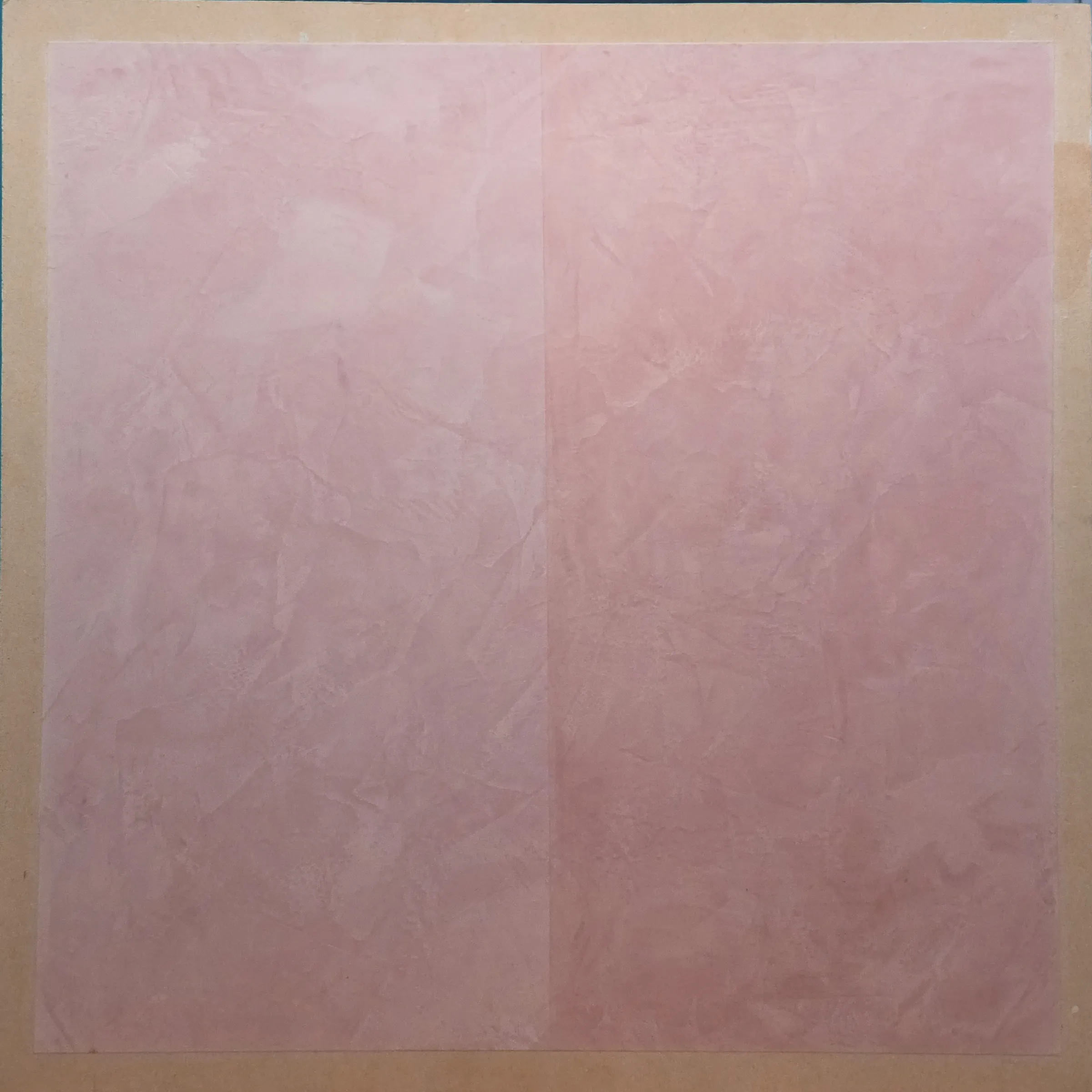
Limewash, Roman clay, or Venetian plaster: how to choose
What each finish is, where it belongs, and where we would talk you out of it.
Free, 20 to 45 minutes. We bring the sample boards.
Talk with Greg or Gabriel now, until 10 p.m. Text us any time. We reply first thing in the morning.
What is the difference between limewash, Roman clay, and Venetian plaster?
Limewash is brushed on and dries matte, with soft, cloudy color. Roman clay is troweled smooth and feels like suede under your hand. Venetian plaster is troweled in thin layers and polished to the depth of marble. Limewash is the smallest investment and suits whole rooms. Clay is harder and has more depth. Venetian plaster is the hardest of the three, the one for a fireplace or a powder room you want people to notice.
Updated
Six finishes, side by side
All six go on by hand, in thin coats. They differ most in sheen, in how they take water, and in how much wear they forgive.
| Finish | The look | At its best | Water | Wear and care | Investment |
|---|---|---|---|---|---|
| Limewash | Matte and chalky, with soft, cloudy color | Whole rooms, ceilings, and brick or stone | Dry rooms and powder rooms, away from splashes | The softest of the six. Dust it, and refresh a busy spot with a new coat | From about $5 per square foot |
| Roman and Moroccan clay | Smooth as suede, with quiet trowel movement and a low sheen once waxed | Living rooms, bedrooms, fireplaces, and ceilings | Humid air is fine. Sealed near a sink, and kept clear of splashes | Harder than limewash. Waxed or sealed, it wipes with a damp cloth; unsealed, it marks | From about $7 per square foot |
| Venetian plaster | Polished, with the depth of marble, from satin to a mirror gloss | Fireplaces, powder rooms, dining rooms, and range hoods | Humid rooms and sealed backsplashes. Never inside a shower | Hard and dense. Waxed, it wipes clean | $13 to $22 per square foot |
| Marmorino and lime plaster | Stone you can feel: fine-grained, matte or softly polished | Fireplaces, hoods and backsplashes, ceilings, and stone-look walls | Humid rooms and sealed backsplashes. Never inside a shower | Thick and tough. Sealed, it wipes clean | $10 to $30 per square foot |
| Tadelakt | A soft, hand-polished sheen with gentle waves and no grout lines | Showers, tub surrounds, steam rooms, and vanities | Made for it, over proper waterproofing | Wash with mild soap, and renew its seal from time to time | $22 to $38 per square foot; showers $33 to $55 |
| Microcement | Even and modern, like honed concrete or one piece of stone, with no grout lines | Showers, bathrooms, countertops, and backsplashes | Made for it, sealed, over proper waterproofing | The hardest of the six. A pH-neutral cleaner, no abrasive pads, and a trivet under hot pans | $30 to $75 or more per square foot |
Each figure is what we quote for homes around Indianapolis, for the finish over a sound, prepared wall. A fireplace or a feature wall takes three to five days on site. Your free consultation ends with one fixed quote, in writing. See the investment in full.
What each finish is, in plain terms
Each one the way we would describe it across your kitchen table. If you are thinking of trying one yourself, read what it really takes first.
-
Limewash
Limewash is slaked lime, water, and mineral pigment, brushed on in thin coats. It goes on translucent and dries several shades lighter, into a matte, chalky surface with soft clouds of color. As it cures, the lime slowly turns back into limestone on your wall.
It is at its best across whole rooms and ceilings, and on brick or stone whose color you want to calm. We would keep it off walls that hands, water, or grease reach every day. More on limewash.
-
Roman clay and Moroccan clay
Roman Clay is Portola’s clay plaster, and Moroccan and Italian clays are its close relatives. All of them are troweled on in thin coats and pressed smooth with steel. The surface looks flat and feels soft, like suede or a river stone, and a final coat of wax deepens the color and adds a low sheen.
It sits between limewash and Venetian plaster: more depth than the first, less shine than the second. We would not put it on a backsplash or in a shower. See Roman clay for the clays we use.
-
Venetian plaster
Venetian plaster is lime and marble dust, laid on in paper-thin layers and burnished with a steel trowel until it shines. Light passes into those layers and comes back out, which is why the wall looks deep, like polished stone. Add veins, and it becomes faux marble with no seams.
Choose it for the surfaces people look at longest, such as a fireplace or a powder room. On a rough or wavy wall, we smooth the surface first, because a polish shows everything. See Venetian plaster and faux marble.
-
Marmorino and lime plaster
Marmorino is Venetian plaster’s grainier cousin: lime with coarser marble in it, applied thicker. Left alone, it is matte and fine-grained, like limestone. Pressed harder, it takes a soft polish. It is the plaster we shape into faux limestone, travertine, and concrete.
This is the one for a wall that should look like stone. It also suits range hoods and backsplashes, where a thicker, sealed plaster stands up to steam and wiping. More on Marmorino and faux stone.
-
Tadelakt
Tadelakt is a Moroccan lime plaster, pressed with a smooth stone and sealed with olive-oil soap. The soap reacts with the lime and makes the surface shed water, which is why it has lined hammams for centuries. It has a soft glow and slight waves, never a flat, even look.
It belongs in a shower or a bath that should feel warm and made by hand. If you want every wall identical, or you would rather not clean gently, look at microcement. Read about tadelakt and where it comes from.
-
Microcement
Microcement is a cement-based coating only a few millimeters thick, troweled over tile, drywall, or concrete and then sealed. It can wrap walls, a shower, or a countertop in one continuous surface with no grout to scrub. It looks like honed concrete or a single slab of stone, in a color made for the room.
Choose it where water or hard use rules out the lime finishes, and when you want a calm, modern surface. It is even by nature, so if you love the cloudy movement of limewash, it will feel plain. See where microcement goes.
Choosing between two that seem alike
Most people arrive torn between two of them. Here is how we would decide.
-
Limewash or Roman clay
Limewash is brushed and looks soft and cloudy. Clay is troweled and looks smooth, with crisper movement and more depth. For a whole room wrapped in color at a smaller investment, we would go with limewash. Where the wall will be touched, or you want it to feel like stone under your hand, waxed clay is the better pick.
-
Roman clay or Venetian plaster
The difference is shine. Clay stays matte or softly waxed, and it quiets a room. Venetian plaster is polished and reflects the room back at you, so it draws the eye. Four walls of clay are easy to live with. In a large room, four walls of Venetian plaster are a lot, which is why most people keep it to one surface or a small room.
-
Venetian plaster or Marmorino
Both are lime and marble. Venetian plaster is finer and polished smooth as glass. Marmorino is grainier and thicker, with a surface you can feel, and it stays matte unless we press it to a soft sheen. Venetian plaster is the one for marble and for gloss. For limestone, travertine, or anything that should look quarried, it is Marmorino.
-
Tadelakt or microcement in a shower
Both make a shower with no grout lines. Tadelakt is lime: softer, warmer, and slightly wavy, and it needs mild soap and a fresh seal now and then. Microcement is cement: harder, more even, and easier to look after. If you want the feeling of a spa, tadelakt is worth the care. For a busy family bathroom, we usually suggest microcement.
-
Limewash or paint
Paint is a film of color that sits on the wall and looks the same from every angle. Limewash cures to a mineral surface with movement in it, and its color shifts with the light through the day. Paint wipes clean more easily, so it suits a wall that takes scrubbing. Keep limewash for the walls people look at more than they touch.
Which finish for which room
Two questions settle most of it: will water touch this wall, and will people?
-
Living rooms, bedrooms, and dining rooms
Dry rooms take any of them. Limewash and clay are the usual choices for all four walls, since they are quiet enough to live with every day. Keep Venetian plaster or stone-look Marmorino for the fireplace or one wall.
-
Hallways, stairs, mudrooms, and children’s rooms
These walls meet shoulders, backpacks, and dog tails. Choose a harder finish, such as waxed clay, Marmorino, or Venetian plaster. Or run limewash above a chair rail and something tougher below it. Limewash alone will show the traffic first.
-
Kitchens
Walls away from the sink and the range can be limewash or clay. Behind them, use microcement or a sealed plaster, such as Marmorino, faux stone, or Venetian plaster, and wipe up lemon juice, vinegar, and tomato sauce soon: acid can etch lime even through a sealer. A plaster range hood suits any troweled finish. Hands rarely touch it, and we seal it against grease.
-
Powder rooms and bathrooms without a shower
Humid air alone does not bother lime or clay, so a powder room can be almost anything, and a small room is where a bold finish is easiest to love. We seal the wall around the sink. Venetian plaster and faux marble do well here, where guests stand close enough to see the detail.
-
Showers, tub surrounds, and steam rooms
Only two finishes belong where water runs down the wall: tadelakt and microcement, both over proper waterproofing. For a steam room, tadelakt is the traditional choice. Limewash, clay, and Venetian plaster stay outside the glass. On the bathroom walls beyond the shower, a sealed lime plaster handles the steam, as long as the room has a working fan.
-
Fireplaces
A fireplace takes almost any of them, because people look at it and rarely touch it. Stone-look Marmorino or Venetian plaster makes it the first thing you notice in the room. Clay or limewash keeps it quieter, a part of the wall. See our fireplace makeovers.
-
Ceilings
Limewash, clay, and Marmorino all go overhead, and a ceiling is the one surface nobody touches. Carry the wall color across it and the room feels cozier by lamplight.
Brick fireplaces: limewash, paint, or a new plaster face
If you like the brick and dislike its color, limewash it. If you are finished with brick altogether, we can plaster over it. Paint is the one we most often talk people out of.
-
Limewash on brick
Limewash sinks into bare brick and bonds with it, so the brick still breathes and nothing sits on top to peel. Brushed on thin, it lets some of the old color through. While it is fresh, we can wash it back for a worn, uneven look, and another coat later makes it more solid. It needs brick that has never been painted or sealed, and you should think of it as permanent: limewash never comes all the way out of porous brick. More on limewash over brick and stone.
-
Paint on brick
Paint gives brick one flat, solid color, and it hides the variation that made the brick worth keeping. It is also close to permanent. Paint settles into the pores, and getting it out again takes harsh stripping that often damages the face of the brick. Where brick takes on moisture, a paint film can trap it and peel.
-
Whitewash and German schmear
Whitewash today usually means paint thinned with water. It looks like limewash on the first day, but it is still a paint film. German schmear is a thin coat of white mortar smeared over the brick and partly wiped away, for the look of an old farmhouse wall. It adds texture and it is permanent, so ask to see a sample first.
-
A new plaster face
Sometimes color is not the problem: the shape is dated, or the mortar joints are heavy. Then we plaster over it. A base coat levels the brick and its joints, and the finish goes over that: Marmorino that looks like limestone, Venetian plaster, clay, or microcement. You end up with one smooth surface that looks like carved stone. We look at the brick in person first, since loose or damp brick has to be put right before anything goes over it.
Plaster or paint: what you gain, and when paint wins
Plaster is not the answer for every wall, and we paint too. Here is how we would weigh them.
-
Depth
Paint is a single film, the same color at every point. Limewash and plaster are built in layers that vary a little in thickness and density, so light goes in and comes back changed. That is why a plastered wall looks different at breakfast than it does by lamplight.
-
A tougher surface, in the right finish
Venetian plaster, Marmorino, and microcement are thicker and far harder than a coat of paint, so they stand up to bumps that would scuff or dent a painted wall. Limewash and unsealed clay are the other way around: softer than a scrubbable paint. If a wall gets rough treatment, tell us, and we will steer you to the hard ones.
-
It ages well
A painted wall looks its best the day it dries, then collects scuffs until it is repainted. A plaster wall changes more slowly, and the wear it does pick up tends to suit it.
-
The investment
Plaster is the larger investment up front, because it is slow handwork. Paint is less now, and you pay for it again at every repaint. The gap narrows over the years you keep a house, though plaster rarely comes out lower. What the difference buys is a wall nobody else has, and one you will not be repainting.
-
When paint wins
Choose paint for a rental, a nursery you will redo in three years, or a wall that gets scrubbed every week. Paint is also right when you want one crisp, even color and nothing else. We do interior painting too, and we will say so when paint is the better choice.
How long they last, and how to live with them
None of these finishes is fragile, but they are not all cleaned the same way.
-
How long they last
Venetian plaster, Marmorino, tadelakt, and microcement are hard surfaces that last for decades when they are looked after. Waxed clay is close behind. Limewash is the soft one: on a wall nobody rubs, it lasts for many years, and where it wears thin, a fresh coat brings it back. Every project carries our five-year workmanship guarantee, which covers our work and not the natural aging of a mineral surface.
-
Cleaning
Dust any of them with a soft, dry cloth. Waxed or sealed plaster and clay take a damp cloth and a drop of mild soap. In a tadelakt or microcement shower, a squeegee after each use does more than any cleaner, and limescale removers and bathroom sprays are too harsh for either. Limewash is the exception: dab a mark dry and never scrub it. Keep vinegar, bleach, melamine sponges, and steam cleaners away from all of them.
-
Scuffs, chips, and touch-ups
A matte finish hides a repair better than a polished one. Limewash is put right with a fresh coat. A patch in clay can show, so the repair usually runs to the nearest corner. A chip in Venetian plaster or microcement is a small job, but the sheen has to match, so call whoever troweled the wall.
-
Water, steam, and sealers
Humid air alone does not trouble lime or clay. Running water is different: it marks limewash and unsealed clay. A sealer or a wax slows water down. It does not make a wall waterproof, and it wears off with cleaning, so it needs renewing from time to time. Where a wall gets wet every day, start with tadelakt or microcement instead.
-
If you change your mind
On a wall indoors, limewash and plaster can be painted over later, once the texture is leveled. Within 30 days of completion, our Change-of-Heart Guarantee covers exactly that: if you do not love a mineral finish, we level the wall and repaint it at no charge. See the guarantee in full.
Questions about choosing a finish
Which wall finish is the most durable?
Microcement, then Venetian plaster and Marmorino. All three cure hard and dense, and once sealed or waxed they stand up to the everyday bumps of a hallway or a kitchen. Waxed clay sits in the middle. Limewash is the softest, which is why we use it on walls and ceilings that people look at more than they touch.
Which finish is best for a bathroom?
It depends on where the water goes. Inside a shower or around a tub, use tadelakt or microcement over proper waterproofing. On the other bathroom walls, a sealed lime plaster or Venetian plaster handles the steam. In a powder room with no shower, almost any finish works, and we seal around the sink.
Is plaster better than paint?
Where looks and a long life matter most, yes. Plaster and limewash have depth and movement that paint cannot copy, and the hard plasters outlast many repaints. Paint is better when you need the smallest investment, one even color, or a wall you can scrub. Most homes end up with both: plaster on the fireplace or a dining room wall, paint in the hallway and the children’s rooms.
Which wall finish costs the least?
Limewash. It wraps a whole room in soft, cloudy color, and it goes on faster than any troweled finish, so it is the smallest investment: from about $5 per square foot of wall in simple rooms. Clay starts from about $7. Venetian plaster runs $13 to $22, Marmorino and faux stone $10 to $30, and microcement $30 to $75 or more. See the investment for every finish.
Should I paint or limewash my brick fireplace?
Limewash it, if the brick has never been painted. Limewash bonds with the brick and lets some of its variation show through, so the fireplace still looks like masonry. Paint gives one flat color and is very hard to remove later. If you want the brick gone altogether, we can plaster over it.
Can you plaster over a brick fireplace?
Yes. We level the brick and its mortar joints with a base coat, then trowel the finish over it: Marmorino that looks like limestone, Venetian plaster, clay, or microcement. What is left is one smooth, stone-like fireplace with no brick showing. We check the brick in person first, because loose or damp brick has to be put right before anything goes over it.
What is the difference between limewash, whitewash, and German schmear?
Limewash is lime and water, and it bonds with brick or plaster as a mineral coating. Whitewash today usually means watered-down paint, which looks similar at first but stays a paint film. German schmear is white mortar smeared over brick and partly wiped off, so it adds texture as well as color, and it cannot be undone.
Can I use more than one finish in the same room?
Yes, and it is often the best plan. Limewash or clay on the walls with a stone-look fireplace is a natural pairing. In one living room, we set floating cabinets plastered in a gray stone texture against a deep gray-green limewash wall. We match the colors to each other, so they look like they belong together.
Which finish hides imperfect walls best?
A textured one. Marmorino, lime plaster, and faux stone have enough body and movement to absorb small waves and old repairs. Limewash softens minor flaws, but it will not hide a dent. Polished Venetian plaster does the opposite and shows everything, so we smooth the wall first, and that preparation is part of your fixed quote.
Do these finishes work over textured or orange-peel walls?
Yes, once the texture is dealt with. Limewash can go over a light texture if you are happy to see it through the finish. Clay and Venetian plaster need a smooth wall, so we skim the texture flat first. We look at your walls during the free consultation and include the preparation in your quote.
How can I compare the finishes in person?
Invite us over. We bring real sample boards to your home, with a lamp that shows them in evening light, so you can hold them against your own wall and run a hand across each one. The visit is free, and most take 20 to 45 minutes.
The easiest way to choose is to see them
We bring real sample boards to your home and look at them with you, in your own light. Greg or Gabriel replies today, or by the next business day.
Prefer to talk? Call or text (317) 795-6378.
Thank you
What happens next
- We reply today, or by the next business day at the latest, to check your dates and set a time for our visit.
- We visit with samples in the colors and textures you like.
- You receive one fixed quote, in writing.
Before we visit, gather two or three photographs of looks you love, and keep any fabric, tile, or stone you want us to match nearby.
To speed things up, text us a photo of the space.
We will call or text you from (317) 795-6378. Save our number, so you know it is us.
Save our number (317) 795-6378Greg and Gabriel
When we visit
- We come to you, at a time you choose. Most visits take 20 to 45 minutes.
- We bring real sample boards and a lamp that shows evening light, so you see each finish as it will look in your room after dark.
- If you are ready, we leave you with one fixed quote, in writing. You owe nothing either way, and your designer is welcome.
- Every project carries a five-year workmanship guarantee, and a mineral finish a 30-day Change-of-Heart Guarantee. See the guarantee in full.
“Our home feels so one-of-a-kind thanks to them.”
Alison